
Press Contact
Becca Smith
Press Releases
LORD TIMPSON TO DELIVER KEYNOTE ADDRESS AT JUSTICE FOR PRISON LEAVERS EVENT
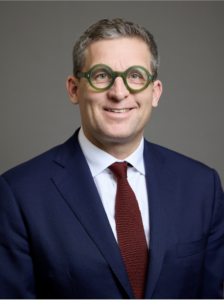
London, UK– Lord Timpson, the Minister of State for Prisons, Probation and Reducing Reoffending, will deliver the keynote address next month at a major event examining how prison leavers in England and Wales are supported as they transition back into society.
Taking place on 18th May at the historic Old Bailey, the fourth event in the Justice for All series will convene a distinguished panel of experts, including individuals with lived experience of leaving prison. Together, they will explore opportunities to strengthen support systems and improve outcomes for those re-entering their communities.
As well as serving as a Government Minister, Lord Timpson brings extensive practical experience from the business world, where he has been a longstanding advocate for the employment of people with criminal convictions. As former CEO of the Timpson Group, he pioneered a recruitment approach that actively supports prison leavers, with the company becoming widely recognised for offering second chances to individuals who might otherwise struggle to access the labour market.
The event aims to create meaningful dialogue and identify practical, evidence-based solutions to better support individuals leaving prison and promote long-term reintegration. Despite significant public investment in the criminal justice system, many prison leavers continue to face persistent and complex barriers to reintegration. Challenges around secure housing, access to employment, benefits provision, and unmet mental health needs remain widespread. These obstacles not only hinder rehabilitation but also increase the risk of reoffending and continued involvement with the justice system.
A panel discussion will follow Lord Timpson’s address, moderated by CEO and Founder of the charity, StandOut, Penny Parker. The panel includes:
- Paula Harriot– CEO, Unlock and prison leaver
- Egerton Junior Bayode – Trustee Resurgo and Oasis Restore
- Martin Jones CBE, His Majesty’s Chief Inspector of Probation
- Paul Cowley MBE, MD Second Chance Partnership, a former soldier and ex-offender.
Each event in the series is accompanied by a dedicated research paper, produced by RAND Europe. The paper for this event will examine the financial, social and systemic costs of reoffending in England and Wales, focusing on the role that insufficient reentry support plays in driving recidivism among prison leavers.
Conceived by Alderman Robert Hughes-Penney, Sheriff of the City of London, the Series sponsor is Serco, the provider of services and support to governments internationally with UK operations spanning defence, space, healthcare, justice and migration, transport and citizen services.
This event is sponsored by Sodexo, the food services and facilities management business which runs six UK prisons on behalf of the Ministry of Justice and Scottish Prison Service. Its Chief Operating Officer, Tony Simpson, the Justice Operations Director for Sodexo Government, will address the audience, which is comprised of professionals from law, policy and the third sector, alongside students and academics.
Insights from all five events will be brought together in a comprehensive final report, to be published this summer, setting out key findings and practical recommendations to strengthen justice across the UK and internationally.
-ENDS-
NOTES TO EDITORS
For media inquiries please contact becca@sistersmithpr.com / 07766522305
For more information and to book press tickets: www.justiceseries.org
Destination City Partnership Fund
The series is supported by the Destination City Partnership Fund, part of the City of London Corporation’s Destination City programme.
Information on safeguarding
CS-GS CIC, through the Justice for All Series 2025-2026, is committed to fostering informed,
respectful dialogue while creating courageous and safe spaces, both online and in person. We
uphold a commitment to ensuring that victims and survivors are partners in our work, treated
with dignity, and that their autonomy is absolute. We pledge that harm, past or present, will
be neither repeated nor ignored, and we remain accountable to the survivor community in
everything we do.
SUPPLY CHAINS UNDER SCRUTINY IN FIGHT AGAINST MODERN SLAVERY

(Sir Edward Braham, Commissioner Global Commission on Modern Slavery and Human Trafficking, Chair M&G plc)
London, UK – Businesses must take greater responsibility for scrutinising their supply chains, while governments must tackle human trafficking with the same urgency and coordination as organised crime, Sir Edward Braham said at the Old Bailey last night.
Speaking at the Justice for All series, Sir Edward Braham – Commissioner of the Global Commission on Modern Slavery and Human Trafficking and Chair of M&G plc – called for urgent, coordinated action to address modern slavery in the UK. In his keynote speech he reinforced the Commission’s recommendation that companies have a “clear legal duty to identify, prevent and address forced labour risks” across their operations and supply chains.
Conceived by Alderman Robert Hughes-Penney, Sheriff of the City of London, the Justice for All Series is a year-long programme of high-level events at the Old Bailey that brings together leaders from law, business, government, and civil society to examine the challenges facing modern justice systems and drive evidence-based reform.
The third event, Justice for Victims and Survivors, saw people with lived experience of trafficking and violence speak about how the justice system must change to better support victims. With an estimated 130,000 people living in modern slavery in the UK, Braham warned that efforts to combat the issue have “lost momentum” and slipped down the political agenda. He outlined three priority actions to drive progress: reshaping the public narrative, strengthening intelligence sharing, and treating trafficking with the same seriousness as organised crime. He also called for closer collaboration between governments and the private sector, urging both to “share information in the same way they do for money laundering and cybercrime.”
Sir Edward Braham said, “ending modern slavery today demands the same courage, sustained funding, and collective will as ending slavery did two centuries ago.”
This event was sponsored by Rathbones whose work on modern slavery includes launching Votes Against Slavery in 2020. Matt Crossman, Stewardship Director at Rathbones highlighted the bank’s support in promoting coordinated investor engagement to drive transparency, compliance and stronger action against modern slavery across UK-listed companies and their supply chains.

(Sir Edward Braham, Commissioner Global Commission on Modern Slavery and Human Trafficking, Chair M&G)
Panel Discussion Highlights
The keynote was followed by a panel discussion moderated by Caroline Haughey KC, who highlighted the importance of understanding cultural context and the barriers that prevent victims from engaging with law enforcement.
Dame Sara Thornton
Bio: Dame Sara Thornton DBE QPM, Former Independent Anti-Slavery Commissioner for the UK and consultant, modern slavery at CCLA. Sara is a retired British police officer, previously Chief Constable of Thames Valley Police and first Chair of the National Police Chiefs’ Council; she is also Professor of Practice in modern slavery policy at the University of Nottingham’s Rights Lab
Thornton stressed that modern slavery is both a moral and economic issue, costing the UK significant resources while generating vast global profits. She called for greater focus on prevention, stronger business due diligence, and improved support to help survivors rebuild their lives.
Jane Lasonder
Bio: Chair of the Survivor Leadership Council at Hope for Justice and Chair of the International Survivors of Trafficking Advisory Council (ISTAC) with the Organisation for Security and Co-operation in Europe / Office for Democratic Institutions and Human Rights (OSCE/ODIHR).
Jane Lasonder shared her lived experience of being trafficked to highlight systemic failures in identifying and supporting victims. She called for a victim-first approach, mandatory frontline training, and greater involvement of survivors in shaping policy and practice.
Antoinette Mutabazi
Bio: Survivor of the 1994 Genocide against the Tutsi in Rwanda and an activist.
Antoinette Mutabazi emphasised the long-term impact of trauma and the need for holistic, survivor-centred support. She highlighted the importance of safe spaces, restoring choice, and improving access to education and opportunities.
James Clarry
Bio: Justice and Care Chief Executive
James Clarry pointed to gaps in the justice system, including low survivor engagement, delays in prosecutions, and inconsistent support. He called for a more consistent, trauma-informed approach and greater use of specialist support roles such as navigators.
Research Insights
Each event in the series is supported by research from RAND Europe. The accompanying paper for this event explores vulnerability to exploitation, the role of public and private sector actors, and the behaviours of perpetrators.
Key findings include:
- Vulnerability is driven by poverty, insecure migration status, lack of awareness of rights, and social isolation, with women, children, and those in care particularly at risk
- Exploitation remains embedded in legitimate markets, especially through complex supply chains and informal labour sectors
- Current responses are fragmented, with gaps in enforcement, corporate accountability, and survivor support
- Businesses often lack visibility over supply chains and may avoid robust due diligence
- Stronger regulation, improved enforcement, and greater collaboration between government and business are urgently needed
The report also highlights the potential for organisations – particularly in the City of London – to lead in tackling modern slavery through ethical practices, responsible investment, and survivor support.
The series is sponsored by Serco, the provider of services and support to governments internationally with UK operations spanning defence, space, healthcare, justice and migration, transport and citizen services.
The event saw Soprano Samantha Crawford sing an Aria and reflect on a new opera she is producing focused on modern slavery and trafficking.
Insights from all five events will be brought together in a comprehensive research paper and book to be published later this year, setting out key findings and practical recommendations to strengthen justice across the UK and internationally.
-ENDS-
NOTES TO EDITORS
For media inquiries please contact becca@sistersmithpr.com / 07766522305
For more information and to book press tickets: www.justiceseries.org
To read the research paper: Justice for those vulnerable to exploitation | RAND
Destination City Partnership Fund
The series is supported by the Destination City Partnership Fund, part of the City of London Corporation’s Destination City programme.
Information on safeguarding
CS-GS CIC, through the Justice for All Series 2025-2026, is committed to fostering informed,
respectful dialogue while creating courageous and safe spaces, both online and in person. We
uphold a commitment to ensuring that victims and survivors are partners in our work, treated
with dignity, and that their autonomy is absolute. We pledge that harm, past or present, will
be neither repeated nor ignored, and we remain accountable to the survivor community in
everything we do.
Modern Slavery and Human Trafficking to be Examined at Justice for All Series
London, UK — The next Justice for All Series event, taking place on 23rd March at the historic Old Bailey, will bring together a distinguished panel to examine the legal and social challenges facing survivors of violence and exploitation, including gender-based violence and modern slavery.
The evening will advocate for stronger victim protection, trauma-informed approaches, and effective legal remedies with the keynote address from Sir Edward Braham, Commissioner Global Commission on Modern Slavery and Human Trafficking, Chair M&G.
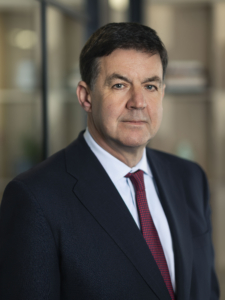
(Sir Edward Braham, Commissioner Global Commission on Modern Slavery and Human Trafficking, Chair M&G)
The panel discussion will be moderated by Caroline Haughey OBE KC.
Panellists include:
- Dame Sara Thornton DBE QPM, Former Independent Anti-Slavery Commissioner for the UK and consultant, modern slavery at CCLA. Sara is a retired British police officer, previously Chief Constable of Thames Valley Police and first Chair of the National Police Chiefs’ Council; she is also Professor of Practice in modern slavery policy at the University of Nottingham’s Rights Lab
- James Clarry, Justice and Care Chief Executive
- Jane Lasonder – Chair of the Survivor Leadership Council at Hope for Justice and Chair of the International Survivors of Trafficking Advisory Council (ISTAC) with the Organisation for Security and Co-operation in Europe / Office for Democratic Institutions and Human Rights (OSCE/ODIHR).
- Antoinette Mutabazi – Survivor of the 1994 Genocide against the Tutsi in Rwanda and an activist.
Each event in the series is accompanied by a dedicated research paper, produced by RAND Europe. The paper for this event will examine why certain individuals are vulnerable to exploitation and the roles public and private sector organisations can play in preventing it,
Conceived by Alderman Robert Hughes-Penney, Sheriff of the City of London, the Justice for All Series is sponsored by Serco, the provider of services and support to governments internationally with UK operations spanning defence, space, healthcare, justice and migration, transport and citizen services.
This event is sponsored by Rathbones whose work on modern slavery includes launching Votes Against Slavery in 2020. This campaign saw coordinated investor engagement and voting to drive transparency, compliance and stronger action against modern slavery across UK-listed companies and their supply chains.
The event will see Soprano Samantha Crawford sing an Aria from “Slave”, a new opera she is producing.
Insights from all five events will be brought together in a comprehensive final report, to be published this summer, setting out key findings and practical recommendations to strengthen justice across the UK and internationally.
-ENDS-
NOTES TO EDITORS
For media inquiries please contact becca@sistersmithpr.com / 07766522305
For more information and to book press tickets: www.justiceseries.org
Destination City Partnership Fund
The series is supported by the Destination City Partnership Fund, part of the City of London Corporation’s Destination City programme.
Information on safeguarding
CS-GS CIC, through the Justice for All Series 2025-2026, is committed to fostering informed,
respectful dialogue while creating courageous and safe spaces, both online and in person. We
uphold a commitment to ensuring that victims and survivors are partners in our work, treated
with dignity, and that their autonomy is absolute. We pledge that harm, past or present, will
be neither repeated nor ignored, and we remain accountable to the survivor community in
everything we do.
Justice for All series warns urgent reform and responsible use of AI are needed to deliver justice for the accused
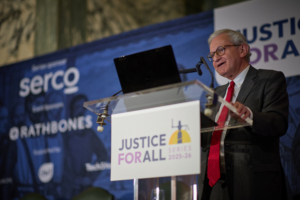
(Master of the Rolls, Sir Geoffrey Vos)
“There is not a minute to lose”: Master of the Rolls urges debate over how AI could reshape the justice system
London, UK: The justice system must urgently prepare for the impact of rapid technological change that is bringing a surge in new cases, the Master of the Rolls, Sir Geoffrey Vos, told the Old Bailey last night.
Delivering the keynote address at the second Justice for All event, Sir Geoffrey – the Head of Civil Justice in England and Wales – said courts and judges must be ready to respond to an AI-driven transformation that could vastly increase the number of civil, family and tribunal claims.
“There is not a minute to lose,” he said. “The legal community needs quickly to address the questions I have posed to work out how AI can and should be used to expedite the delivery of civil and criminal justice, in the way that I have indicated is expected by our citizens and businesses.”
Sir Geoffrey highlighted the growing impact of artificial intelligence and quantum computing, predicting fundamental changes to online and offline security, evidence gathering and verification.
While recognising that some people may increasingly prefer disputes to be resolved by machines rather than waiting for human judges, he stressed that humans must remain central to final justice decisions affecting people’s lives.
Sir Geoffrey said that “the very concept of justice has changed”. He added: “It is now a firm and unshifting expectation that justice should be equally available to everyone in society, from the least to the most privileged.
“That expectation alongside the complexity of modern society and the existence of massive datasets creates many more cases at all levels, whether civil or criminal.
“That provides a challenge for the delivery of justice that can only be fulfilled by the adoption of new technologies and AI. Legal representation and procedural fairness have to be considered in that context.”
Sir Geoffrey called for an urgent national debate on how AI should be deployed responsibly in the justice system, raising key questions including:
- which judicial decisions must always be made by humans
- when, if ever, parties should be able to consent to machine-made judicial decisions
- how technologically verified evidence should be regulated in an era of advanced AI and quantum computing
- how Article 6 of the ECHR and Article 14 of the EU AI Act shape these decisions
The event forms part of the Justice for All series, a year-long initiative conceived by Alderman Robert Hughes-Penney, Sheriff of the City of London, exploring the future of the UK justice system and its economic, social and moral foundations.

(Robert Hughes-Penney, Sheriff of the City of London)
Reflecting on the keynote speech and panel discussion, Alderman Hughes-Penney said, “Justice underpins our freedoms, our economy and our community life. Yet our systems are overstretched, underfunded and, in some respects, outdated. Justice for all is not only a moral imperative, it also makes economic sense.”
Hughes-Penney welcomed the publication of the second part of Sir Brian Leveson’s review, calling for constructive, evidence-based responses to the challenges facing the justice system.
The event opened with remarks from the Recorder of London, Mark Lucraft KC, and Graham Blair, Strategy and Business Development Director Serco Group, sponsor of the Justice for All series.
A panel discussion, moderated by Andrea Coomber KC (Hon), Chief Executive of the Howard League for Penal Reform, brought together senior voices from across the justice system:
- Rt Hon David Gauke, Chair, Independent Sentencing Review
- Richard Susskind CBE KC (Hon), University of Oxford and author
- Charlie Taylor, HM Chief Inspector of Prisons
- Katie Wheatley, Head of Crime, Fraud & Regulatory, Bindmans LLP

(L-R Rt Hon David Gauke, Charlie Taylor, Andrea Coomber KC Hon, Richard Susskind CBE KC, Katie Wheatley)
Katie Wheatley warned that delays in the courts undermine confidence in justice and must not be addressed at the expense of defendants’ fundamental rights.
Wheatley said, “delays aren’t good for the accused or for the system as a whole,”. “There are many things that could and should be done first but reforms must not erode the right to a jury trial. This is a watershed moment to move away from a ‘lock them up and throw away the key’ model.”
David Gauke focused on the political realities facing reform:
“There are huge demands on public finances, and politicians will always respond to public opinion. If we are serious about reducing backlogs, some form of change is inevitable. The challenge is doing that in a way that reassures the public the system won’t collapse.”
He urged government to move faster in embracing technology, while maintaining trust:
“The biggest challenge is how we move to a system that can be updated and upgraded more frequently, while reassuring the public that justice remains fair and robust.”
Charlie Taylor highlighted the human cost of delay and overcrowding in prisons:
“Too many prisoners are locked in Victorian, overcrowded cells for up to 22 hours a day with little to do. Technology has a role to play, but it must never be a substitute for human contact. Prisons are a people business.”
Richard Susskind argued the justice system must become far more proactive in innovation:
“The justice system needs its own R&D capability. It has to get ahead of technology rather than constantly reacting to it.”
New research: delays, costs and consequences
The event coincided with the publication of a new research paper, Justice for the Accused: Drivers and costs of inefficiencies in the criminal court system in England and Wales, which examines the causes and consequences of growing court backlogs.
The research shows that by June 2025, the Crown Court backlog reached 78,329 outstanding cases, the highest level on record, with some trials listed as far ahead as 2027–2028.
Rather than a single cause, the backlog reflects compounding pressures including workforce shortages, court closures, deteriorating infrastructure, limited sitting days, and persistent technology and data gaps. Nearly 43% of courts in England and Wales closed between 2010 and 2022, reducing physical capacity and increasing travel distances for court users.
The paper finds that short-term cost-saving measures have generated significant long-term economic and social costs, including:
- wasted judicial time and public funds from failed hearings
- increased remand populations and higher prison costs
- increased reoffending linked to prolonged delays
While reforms such as restricting jury trials may reduce trial duration, the paper cautions against expecting transformative impact from any single procedural change.
The research was prepared by Emma Zürcher and Lucy Strang of RAND Europe, an independent, not-for-profit policy research organisation.
Insights from the five Justice for All events will culminate in a final report to be published this summer, synthesising recommendations for strengthening justice across the UK and internationally.
The next event, scheduled for 23rd March, will focus on justice for survivors and victims confronting the legal and social challenges facing survivors of violence and exploitation, including gender-based violence and modern slavery.
The Justice for All series is sponsored by Serco and supported by the Destination City Partnership Fund, part of the City of London Corporation’s Destination City programme.
-ENDS-
ABOUT UN SDG 16
The adoption of SDG 16 by the United Nations (UN), as part of the 17 global goals that were introduced in the 2030 Agenda for Sustainable Development. SDG 16 seeks ‘to promote peaceful and inclusive societies for sustainable development, provide access to justice for all and build effective, accountable and inclusive institutions at all levels’. Developed in 2015 as a global framework with twelve specific targets, SDG 16 positions justice not as a peripheral ideal but as a foundational driver of social cohesion and prosperity.
NOTES TO EDITORS
For media inquiries please contact becca@sistersmithpr.com / 07766522305
For more information and to book tickets: www.justiceseries.org
Justice for All Series Launches with Debate on the Rule of Law and the Economic Legacy of Magna Carta
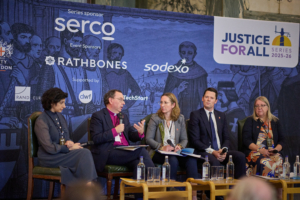
(L-R, Maha Jweied, CEO, Responsible Business Initiative for Justice, The Rt Revd Philip Mounstephen, Bishop of Winchester, moderator Caroline Haughey OBE KC, Rt Hon Alex Chalk KC, former Lord Chancellor and Secretary of State for Justice and Dr Karen Brewer, Secretary General, Commonwealth Magistrates and Judges Association)
London, UK: More than eight centuries after Magna Carta established the principle that no one should be denied or delayed access to justice, the first Justice for All event has brought together leading voices from the judiciary, government, faith, and civil society to explore the enduring economic and moral importance of justice.
The event, held last week at the Old Bailey, marked the launch of the Justice for All series, a year-long initiative conceived by Alderman Robert Hughes Penney, Sheriff of the City of London, to explore the future of the UKs justice system.
In the presence of an original Magna Carta, the event opened with remarks from the Recorder of London, Mark Lucraft KC, who launched the Justice for All series and framed the evening’s discussion around the enduring importance of the rule of law, access to justice, and global accountability.
Lord Neuberger, former President of the UK Supreme Court, delivered the keynote address, warning of the erosion of public confidence in justice systems due to chronic underfunding, inefficiency, and political neglect. He cautioned against the UKs potential withdrawal from the European Convention on Human Rights (ECHR), describing it as a step that would undermine long held commitments to fundamental rights.
“Real progress depends on political will and sustained investment to reverse the downward spiral of justice services,” Lord Neuberger concluded, calling for renewed commitment to fairness, access, and judicial independence.
A panel discussion followed, moderated by Caroline Haughey OBE KC, featuring:
- Dr Karen Brewer, Secretary General, Commonwealth Magistrates and Judges Association
- Rt Hon Alex Chalk KC, former Lord Chancellor and Secretary of State for Justice
- The Rt Revd Philip Mounstephen, Bishop of Winchester
- Maha Jweied, CEO, Responsible Business Initiative for Justice
Dr Karen Brewer reflected on the Commonwealths responsibility to uphold the rule of law, urging greater courage in confronting authoritarianism.
Alex Chalk KC highlighted the rule of law as a cornerstone of the UKs global standing and prosperity:
“Our legal sector is the second largest in the world. It anchors our freedoms, prosperity, and security. But we must not be complacent there is a storm coming in how people perceive the rule of law. We must show that it works for people, not against them.”
Bishop Mounstephen warned that authoritarianism and nationalism threaten global stability, calling for renewed multinational commitment to impartial, depoliticised justice.
Maha Jweied connected the discussion to the UNs global agenda, emphasising that SDG 16 underpins all other Sustainable Development Goals:
“Justice requires a multi stakeholder approach. Government, business, and civil society must work together to defend rights and strengthen institutions.”

(Sheriff of the City of London, Alderman, Robert Hughes-Penney)
Sheriff and Investment Director at Rathbones, Robert Hughes Penney said:
“Hearing such a wide range of perspectives reminded us that justice is not an abstract concept but a living system that touches every part of society. With Magna Carta beside us at the Old Bailey, the discussion made clear that maintaining trust in justice demands courage, collaboration, and investment. Through the Justice for All series, we aim to turn these reflections into practical action to ensure that access to justice remains strong for generations to come.”
Published on the day of the event, The Economic Legacy of Magna Carta, a new RAND Europe briefing paper highlighted the link between justice, economic prosperity, and the urgent need to finance UN Sustainable Development Goal 16 (SDG 16).
The paper, authored by RAND Europe researchers Emma Zurcher and Lucy Strang, draws parallels between Magna Carta and SDG 16, both of which aim to strengthen justice, accountability, and the rule of law. It argues that investment in justice delivers measurable financial returns and underpins stable societies, yet global funding for justice remains critically low.
Key insights include:
- Magna Carta helped establish commercial and property rights that laid the foundations for long term economic growth.
- SDG 16 could have a similarly transformative impact if adequately funded and implemented.
- Innovative financing models such as green bonds and sustainability linked instruments could be adapted to mobilise private capital for justice initiatives.
Insights from the five events will culminate in a final report to be published next Summer, synthesising findings and recommendations for strengthening justice across the UK and internationally.
The next event in February 2026 focuses on justice for the accused looking at delays in the Courts and justice systems and how technology and AI may improve the efficiency and fairness of the justice system.
-ENDS-
ABOUT UN SDG 16
The adoption of SDG 16 by the United Nations (UN), as part of the 17 global goals that were introduced in the 2030 Agenda for Sustainable Development. SDG 16 seeks ‘to promote peaceful and inclusive societies for sustainable development, provide access to justice for all and build effective, accountable and inclusive institutions at all levels’. Developed in 2015 as a global framework with twelve specific targets, SDG 16 positions justice not as a peripheral ideal but as a foundational driver of social cohesion and prosperity.
Released November 2025
Justice for All Series
The Justice for All Series is a year-long programme of high-level events that will bring together leaders from the legal, political, corporate, and civic sectors. It examines the urgent challenges facing modern justice systems and the investment and reform needed to address them; why justice for all makes economic sense.
The concept was developed by Alderman Robert Hughes-Penney, who along with Deputy Keith Bottomley, has been elected as one of the Sheriffs of the City of London for 2025/26. Taking office in September for one year, among their duties will be hosting this series, centred at the Old Bailey—the most iconic criminal court in the world and a symbol of the UK’s legal heritage.
The series, sponsored by Serco, the provider of services and support to governments internationally with UK operations spanning defence, space, healthcare, justice and migration, transport and citizen services, will explore the financial, moral, and institutional requirements for delivering justice in the 21st century. It aims to identify practical strategies for improving judicial infrastructure, supporting survivors and the accused, reducing reoffending, and harnessing new technologies like AI for the public good.
The first of five events launches this autumn at the Old Bailey provides the backdrop to later events and commemorates two major milestones: the 800th anniversary of the 1225 reissue of Magna Carta and the 10th anniversary of UN Sustainable Development Goal 16: Peace, Justice, and Strong Institutions. Supported by the City of London Corporation in partnership with the Magna Carta Trust, the event will feature a keynote address by Lord Neuberger, former President of the UK Supreme Court and former Master of the Rolls and will provide a timely opportunity to reflect on the rule of law. Panellists at the first one include:
- Dr Karen Brewer, Secretary General Commonwealth Magistrates & Judges Association,
- Rt Hon Alex Chalk KC, former Lord Chancellor,
- Maha Jweied, CEO of Responsible Business Initiative for Justice, and
- Rt Rev Philip Mounstephen, Bishop of Winchester.
Subsequent events will focus on:
- Justice for the Accused – exploring fair treatment and access to representation – 4th Feb 2026
- Justice for Survivors – addressing support for victims of modern slavery and gender-based violence – 23rd Mar 2026
- Justice for Prison Leavers – tackling rehabilitation, education, and employment – 18th May 2026
- Financing sustainable improvements to the justice system– financing justice for the next generation – 29th Jun 2026
Each event will be supported by briefing papers prepared by RAND Europe, an independent, not-for-profit policy research organisation dedicated to improving policy and decision-making through rigorous, objective research and analysis. The topics discussed at the five events will be synthesized into a capping report to be published in the Summer of 2026.
Released 2nd September 2025
Serco Sponsors the Justice for All Series
London, UK — Serco, the international provider of critical government services, has beenannounced as the lead sponsor of the Justice for All Series, a landmark programme of
events dedicated to building a fairer and more effective justice system. Hosted at the world’s most famous criminal court, the Old Bailey, the series will convene leading voices from the legal, political, corporate, and civic spheres to tackle some of the most urgent challenges facing justice systems today. Themes will include sustainable investment, judicial reform, and the integration of new technologies.
Serco will speak at the inaugural event on 30 October 2025, contribute to the expert panel at the Justice for the Accused event on 3 February 2026, and take part in the closing event in June 2026.
Within the justice system, Serco plays a vital role in prisoner escorting and court custody services, as well as managing and operating 11 prisons across England, Australia and New Zealand, where they deliver innovative programmes designed to prepare individuals for successful reintegration into society. Their holistic approach to rehabilitation focuses on education, skills development, and meaningful work opportunities inside prisons—equipping people with the tools to rebuild their lives. Beyond release, Serco provides support with employment, housing, and mentoring to reduce reoffending and strengthen communities. The initiative was conceived by Alderman Robert Hughes-Penney, who this month takes office as Sheriff of the City of London. The series also marks two major milestones: the 800th anniversary of the 1225 reissue of Magna Carta and the 10th anniversary of UN Sustainable Development Goal 16: Peace, Justice, and Strong Institutions.
Alderman Robert Hughes-Penney said: “Justice is the foundation of a fair and thriving society. With Serco’s valued support, the Justice for All Series will bring together leaders from across sectors to confront systemic challenges and explore practical, evidence-based solutions that promote rehabilitation, reduce reoffending, and strengthen trust in our justice system. I am deeply grateful to Serco for their commitment to this vital work.”
Mark Whittaker, Managing Director of Justice at Serco, said: “At Serco, we believe that justice must serve everyone – victims, communities, and those seeking a second chance. Our partnership with the Justice for All Series reflects our shared commitment to building a justice system that is not only efficient and secure, but also compassionate and forward-looking. By investing in rehabilitation, education, and reintegration, we aim to reduce reoffending and ease the wider impact of crime on society and the economy. Together, we can create pathways to reform that uphold dignity, restore lives, and strengthen public trust in justice”.
The Justice for All Series will identify practical strategies for improving judicial infrastructure, supporting survivors and the accused, reducing reoffending, and harnessing new technologies—including AI—for the public good.
Released September 2025
Lord Neuberger to Deliver Keynote at Launch of Groundbreaking ‘Justice for All’ Series
Keynote to outline vision for a modern justice system in a changing world
London, UK- The Justice for All series—a bold new initiative exploring the future of the UK’s justice system—will launch this autumn with a keynote address by Lord Neuberger, former President of the UK Supreme Court.
Marking the start of a year-long programme, the first event, ‘800 Years of Justice; Magna Carta to UN SDG 16’, will see Lord Neuberger’s speech provide a timely and authoritative reflection on the rule of law and its place in a fair and functional society.
Held at the world’s most famous criminal court, the Old Bailey, the Justice for All series will bring together influential voices from across the legal, political, corporate, and civic spheres to confront the urgent challenges facing modern justice systems. Topics will include sustainable investment, judicial reform, and the integration of new technologies.
The initiative was conceived by Alderman Robert Hughes-Penney, who will take office next month as Sheriff of the City of London. The series commemorates two major milestones: the 800th anniversary of the 1225 reissue of Magna Carta and the 10th anniversary of UN Sustainable Development Goal 16: Peace, Justice, and Strong Institutions.
“I am delighted to contribute to this important initiative,” said Lord Neuberger. “The Justice for All series offers a timely and much-needed platform to reflect on the meaning of justice in today’s society. I look forward to delivering the keynote address and to the conversations—and actions—that this series will inspire over the year ahead.”
Confirmed speakers for the first event include Dr Karen Brewer, Secretary General of the Commonwealth Magistrates’ and Judges’ Association, Former Secretary of State for Justice, the Rt Hon Alex Chalk, the Rt Revd Philip Mounstephen the Bishop of Winchester and Maha Jweied, CEO of the Responsible Business Initiative for Justice.
The series, sponsored by Serco, the provider of services and support to governments internationally with UK operations spanning defence, space, healthcare, justice and migration, transport and citizen services, will explore the financial, moral, and institutional requirements for delivering justice in the 21st century. It aims to identify practical strategies for improving judicial infrastructure, supporting survivors and the accused, reducing reoffending, and harnessing new technologies like AI for the public good.
Released September 2025